Jewellery
How to buy diamonds and an engagement ring in Dubai without overpaying
Buy the stone and the setting as two separate line items, get an independent GIA or IGI report, and compare the identical specification across a few shops. Gold and Diamond Park is the most practical place in Dubai to do all three.
Treat the stone and the setting as two separate purchases with two separate prices, insist on an independent certificate for anything meaningful, and compare the identical specification across three shops before you pay. Dubai is a good place to buy diamonds because there are a lot of sellers competing and the tax is low, but nothing here is fixed-price, so the saving only exists if you do the comparing. Gold and Diamond Park is where I would send most people first.
The 4Cs, and the one not to compromise
Cut, colour, clarity, carat. Carat is weight. Colour runs from D, which is icy white, down the alphabet as a warm tint creeps in. Clarity is about internal marks. Cut is how well the stone has been shaped to throw light back at you.
Cut is where your money works hardest and it is the one people underrate, because it is the only C that is about workmanship rather than luck. A well-cut stone one colour grade lower will out-sparkle a whiter stone that has been cut badly, every time. If your budget forces a compromise, drop colour or clarity a notch and hold the cut. Also ask to see the stone away from the counter spotlights, which are designed to make everything look brilliant.
Lab-grown or natural?
They are the same material. A lab-grown diamond is chemically and optically a diamond, and you cannot tell them apart by eye or with a loupe. What differs is origin, price and resale.
At the time of writing a certified lab-grown stone costs somewhere in the region of 70 to 85 per cent less than a natural stone of the same specification, and that gap has widened every year. Treat any percentage, including that one, as a snapshot and get both quotes on the day. The trade-off is resale: natural stones hold some value, lab-grown ones have almost none. So I think of natural as the heirloom choice and lab-grown as the way to wear a bigger, cleaner stone now. Neither is the wrong answer, but know which one you are buying and get it certified either way.
GIA or IGI, and what changed
Never buy a significant stone without an independent lab report. It is the only thing standing between you and the shop's own opinion of its own stock.
For natural diamonds, GIA is the strictest lab and still reports the full 4Cs. For lab-grown, the picture changed on 1 October 2025: GIA stopped issuing 4Cs grades on lab-grown stones and moved to a simpler quality assessment labelled Premium or Standard, on the reasoning that almost all lab-grown production falls into a narrow band anyway. That means an IGI report, which still gives you the 4Cs, often tells you more about a lab-grown stone than a GIA one now. Whichever you get, hold the physical report, check the number laser-inscribed on the girdle matches it, and do not accept a photocopy.
Where to buy in Dubai
Gold and Diamond Park on Sheikh Zayed Road is the practical first stop: around 90 retailers with workshops attached, so you can buy a certified loose stone and have it set in a design you choose, with both costs visible. That separation is the single most useful thing you can do for your budget.
The Dubai Mall covers the other end, with international houses at fixed global prices and no negotiation, plus regional names like Damas and Malabar. You pay for the brand and the aftercare, which for a ring somebody will wear for decades is not nothing. The Deira Gold Souk has diamond dealers too, and lower charges, but it rewards people who already know what they are looking at. My guide to where to buy gold in Dubai explains how the making charge on the metal half works.
Engagement rings: settings, metal and size
The setting decides the personality of the ring and a good chunk of the price. A solitaire is the plain single stone and ages well. A halo rings the centre stone with small diamonds, which makes a 0.70ct read close to a full carat, and it is the most effective budget trick there is. Pave puts stones along the band. Bezel settings protect the stone and suit anyone who works with their hands.
On metal, 18K white or yellow gold suits most people and most budgets. Platinum costs more, is denser and more durable, and holds up better if the wearer is hard on jewellery. White gold needs replating every few years to stay bright, which nobody mentions at the till.
If it is a surprise, get the ring size before you buy, not after. Borrow a ring she already wears on that finger and take it in. Gold and Diamond Park can resize most designs quickly, but eternity bands and pave settings that run the full band often cannot be resized at all.
What should you budget?
The range is enormous and anyone quoting an average is guessing. The same one carat varies several times over on cut and certification alone, and lab-grown changes the maths completely. Set your number first, then buy the best cut inside it rather than the biggest stone. Ask for the stone and the setting as separate lines, and remember the first number is rarely the last, especially at the Park and the souk.
On tax: diamond jewellery carries five per cent VAT like everything else. Residents pay it. Visitors can reclaim most of it through the tourist refund scheme, which needs a participating retailer, a minimum spend of AED 250 and validation at the airport before you fly.
What I have actually seen
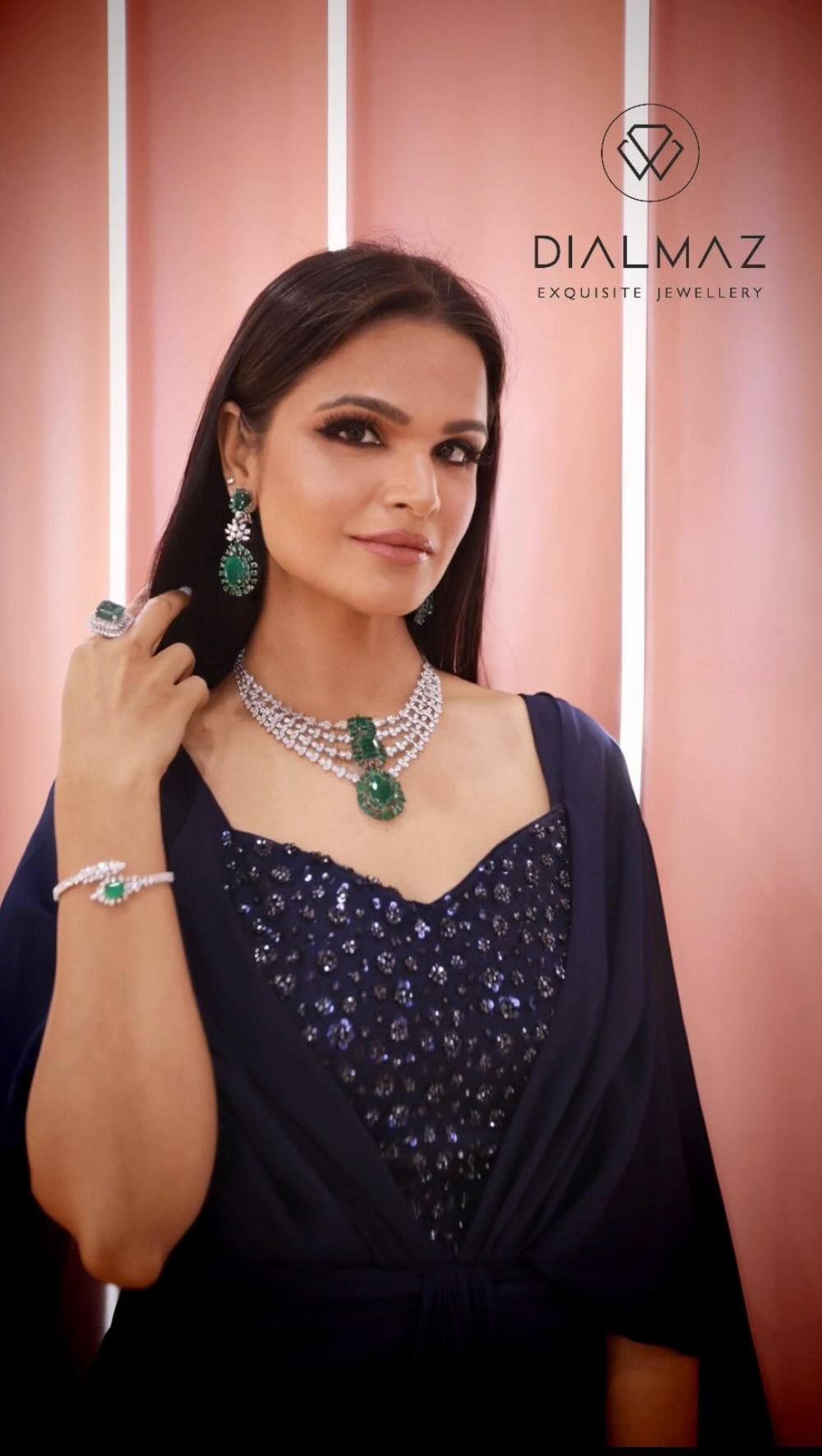
I do not buy fine diamonds often, so I will not pretend to be a dealer. What I do get is a lot of stock up close at launches. I covered DIALMAZ bringing its fine jewellery to the UAE at the Jewels of Emirates Show at Expo Centre Sharjah, 29 January to 2 February 2025, and the useful part of a show like that is holding ten versions of the same idea in one afternoon and working out what you actually respond to. In April 2025 I went to the Joanna Laura Constantine launch at Etoile La Boutique, pearls and sculptural shapes rather than solitaires, and a good reminder that fine jewellery is not only rings.
Disclosure: DIALMAZ and Etoile La Boutique invited me to these launches. My opinion is my own.
What I would skip
Skip any stone sold without an independent lab report, however good the price sounds. Skip buying carat weight at the expense of cut, the most common expensive mistake. Skip a quote that comes as one total. Skip pressure, including the polite kind: a shop that will not let you go away and think is telling you something.
Once it is on her hand, how to style statement jewellery covers wearing it with everything else you own.
All my Jewellery guides · Brands: work with me on jewellery.