Fashion
What to wear in Dubai as a woman: heat, dress codes and every occasion
Wear loose, covered clothes in linen or cotton, keep shoulders and knees covered in malls, souks and mosques, carry a scarf and one light layer for the air conditioning. Swimwear belongs at the beach and the pool, nowhere else.
What to wear in Dubai as a woman comes down to four habits: loose clothes in natural fabrics, shoulders and knees covered anywhere that is not a beach or a pool, a scarf in your bag, and one light layer for the air conditioning. That is the whole system. For half the year the heat is the real dress code, and the cultural one is lighter than most visitors expect. I live here and I still dress by those four rules most days.
What is the weather actually like, and when?
Dubai has two seasons, not four. From roughly May to September daytime temperatures sit above 40°C, and from July the humidity arrives, which is the part that really wears you down. You also spend the day swinging between that heat and buildings cooled to the point of goosebumps. From October to April it is the Dubai in the brochures: mid 20s to low 30s by day, evenings that cool off properly, and December to February nights that can feel cold if you are by the water or in the desert.
A quick month-by-month line, because people search for it:
- July and August: the hottest, stickiest weeks. Linen, cotton, nothing fitted, and as little time outdoors in the middle of the day as you can manage.
- September: still summer. Do not pack for autumn.
- October and November: the switch. By mid November you can sit outside at dinner without thinking about it.
- December and January: lovely days, cool nights. You want a trench, a leather jacket or a proper knit for evenings out.
- February to April: warming up fast. April is already hot by mid afternoon.
Which fabrics keep you cool in Dubai heat?
Linen first, and for a real reason. Linen fibres absorb a lot of moisture and release it quickly, and the fabric is usually woven loosely and stands away from the body rather than clinging, so air moves between you and the cloth. It is not "hollow fibres" doing magic, it is weave and absorbency. The trade-off is creasing, which is why a linen and cotton blend crumples more softly and is often the better buy here.
After linen: cotton voile and poplin for shirts, chiffon and georgette for dresses that need to float, modal and viscose for anything that has to drape. Avoid polyester and nylon in summer. They hold heat against the skin and shine under indoor lights. Light colours reflect sun, so cream, sand, white and pale blue feel cooler than black, and if you love a black abaya buy the lightest fabric you can find. Loose and covered is genuinely cooler than bare, because shade plus airflow beats sun on skin.
Is there a dress code in Dubai, honestly?
There is guidance, and then there is real life. The UAE government's advice for visitors is to dress modestly in public places, especially malls, to avoid anything transparent or revealing, and to keep swimwear for beaches and pools. Most malls post a sign asking for shoulders and knees to be covered. In practice, enforcement is light. You will see tourists in very short shorts in Dubai Mall and nobody stops them, but you will also see the looks.
Where it actually matters: mosques, government offices, courts, the older souks in Deira and Bur Dubai, and anywhere full of Emirati families. Where it does not: the beach, hotel pools, beach clubs, the Marina and JBR walk, and most restaurants and bars after dark. Nobody polices the beach. A scarf in your bag solves almost every grey area.
Can you wear shorts in Dubai?
Yes, with judgement. Shorts are fine at the beach, by the pool, at beach clubs, around JBR and the Marina, and in most hotels. In malls, aim for knee length or close to it and add a sleeve. In old Dubai, at the souks and the abra station, wear trousers or a midi. I would not wear shorts to a mosque, a government office or a family restaurant in Deira, and I would not wear a crop top anywhere outside a beach club.
What should you wear for each occasion?
| Occasion | Wear | Shoes | Bring |
|---|---|---|---|
| Mall | Linen dress, or wide trousers and a loose top | Flat sandals | Scarf or light shirt for the AC |
| Work | Linen-blend trousers, relaxed blouse | Loafers or low block heel | Blazer, worn only indoors |
| Brunch | Floaty midi or maxi, or a co-ord | Flat sandals or a low heel | Sunglasses, a wrap |
| Dinner in DIFC | Midi dress, or trousers and a silk top | Closed heel or pointed flat | Blazer or wrap, the rooms are cold |
| Beach club | Swimwear plus a kaftan or shirt dress | Leather slides | Hat, SPF, a cover-up for the walk in |
| Desert safari | Long light trousers, long sleeves, a scarf | Closed shoes, not sandals | A jacket for after sunset |
| Mosque visit | Long sleeves, long skirt or trousers | Easy to slip off | Your own headscarf |
A few notes the table cannot hold. The blazer question comes up in every guide I write, so here it is once: in summer, carry the blazer and put it on at the door. Outside it is dead weight. Inside, restaurants, offices and cinemas run cold enough that you will be glad of it. The same goes for a wrap at dinner and a light shirt in the mall.
For the desert, sand gets into everything, the wind picks up, and the temperature drops after sunset, properly so in winter. Long and light beats short and bare, and closed shoes beat sandals. For a mosque, Jumeirah Mosque runs public visits for non-Muslims through its Open Doors, Open Minds programme. Modest clothing is asked for and women cover their hair. At the time of writing the fee is around AED 45, no booking is needed, and sessions run in the morning and early afternoon every day except Friday. Check the current times before you go.
Evenings have their own rules. I have written separately about what to wear for a night out in Dubai, venue by venue, and about what to wear to a wedding in Dubai as a guest, because both deserve more than a row in a table.
Which sun hat and sunglasses actually protect you?
Buy the brim before the look. A 1992 British Journal of Dermatology study on hats found you need a brim wider than about 7.5 cm to get reasonable protection around the nose and cheeks. Narrower than that and the hat is decoration. Three shapes cover most of life here: a wide floppy or boater for the beach and brunch terraces, a Panama or straw fedora for the city (narrower brim, so a city hat, not a beach hat), and a straw bucket for errands, which shades your eyes more than your cheeks. Hold the hat up to the light in the shop: you should see some daylight through the weave but not your hand, because tight synthetic straw traps heat on your scalp.
Wear it low and level, not tipped back. Store it crown down, never in plastic, and never fold a Panama. For sunglasses, the only rule I care about is UV protection marked on the lens. The hat is a second layer over SPF 50, never a replacement, and my sun routine is in my skincare routine for the Dubai climate.
What I actually wear in a Dubai summer
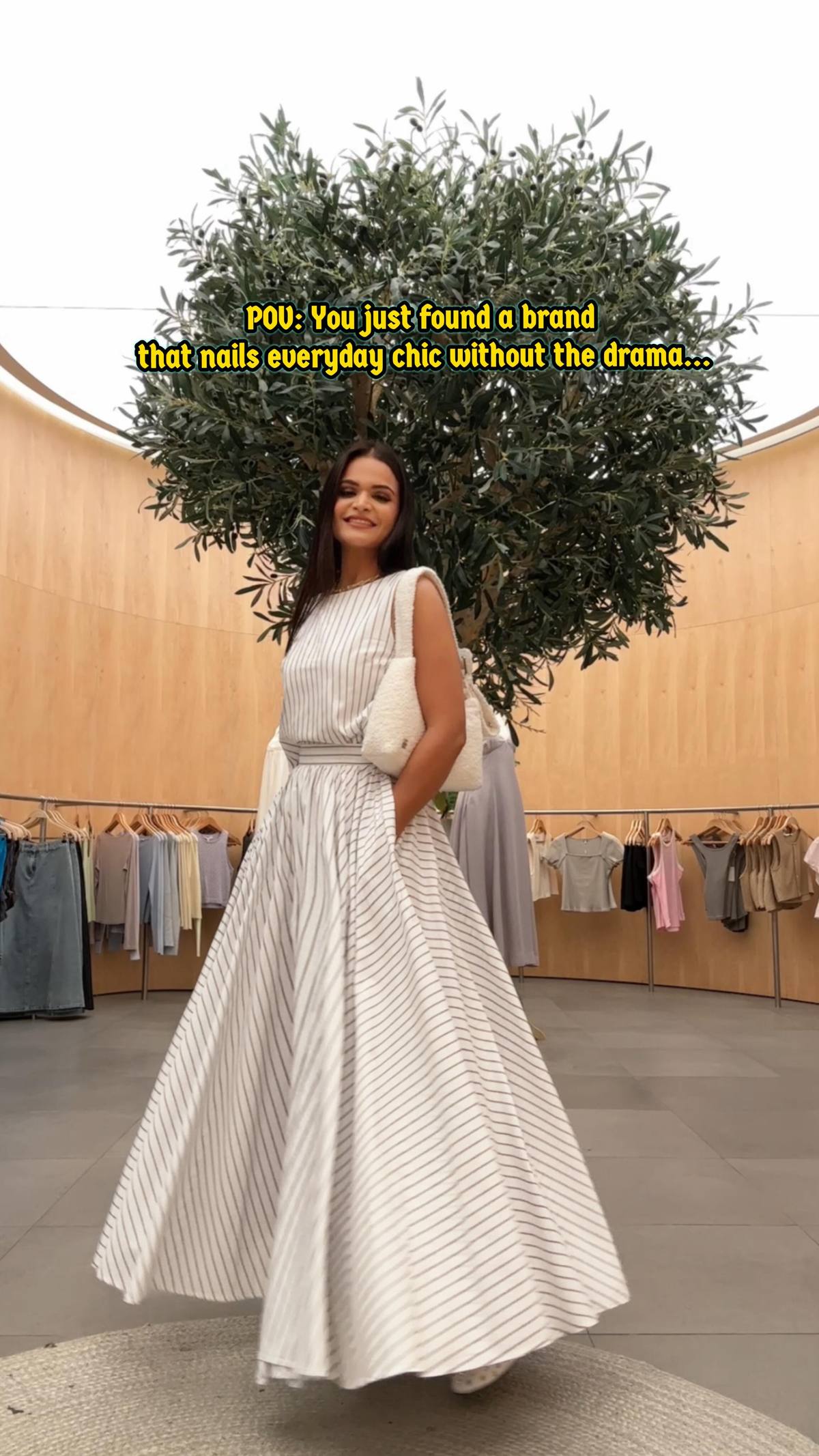
My summer uniform is a linen set or a linen dress, flat sandals, big sunglasses and a scarf in the bag, and the Instagram record backs it up. In May 2025 I filmed a reel in linen sets from The Editor's Market, which has branches across the UAE, and the caption said modest, modern and made for the everyday, which is still the brief. In July 2025 I wore a blue ombré Acler dress and captioned it "wearing the weather I wish for", because by late July I am dressing for a breeze that does not exist. In August 2026 it was a full Zara look with a wide straw hat. The brands change. The formula does not.
Disclosure: The Editor's Market and Acler (via Bloomingdale's) are brands I have worked with. My opinion is my own.
What should you pack for a week in Dubai?
For summer, May to September:
- Three linen or cotton dresses, midi or maxi
- One pair of wide linen-blend trousers and two loose tops
- One lightweight blazer or a long shirt for the AC
- Swimwear and a kaftan or shirt dress as a cover-up
- Flat sandals, leather slides, one pair of closed shoes
- A wide-brim hat, sunglasses, a scarf, SPF 50
For winter, November to March, swap one dress for jeans, add a trench or a proper knit for evenings, and keep the closed shoes for a night in the desert. Dubai can feel cold at 10pm in January, whatever the brochure says.
What I would skip
- Polyester "summer" dresses. They look fine in the shop and feel like cling film by noon.
- Heels for daytime. Marble floors and car park walks in 45°C heat will ruin your feet and the shoes.
- Buying an abaya for a mosque visit. Jumeirah Mosque will lend you suitable clothing; you only need your own scarf.
- Black head to toe in August. It looks sharp and feels like an oven.
If you live here and your 40s have changed how you dress, my notes on how to dress in your 40s in Dubai pick up where this leaves off. If you want an abaya for Ramadan, Eid or a wedding, start with where to buy abayas in Dubai.
All my Fashion guides · Brands: work with me on fashion.